

Why study Geography?
- Geography is the study of people, place and environment and is key to understanding global issues such as climate change and sustainable development. It is one of the eight facilitating subjects that are preferred to gain access to the ‘Russell Group’ of top UK universities.
- You will develop knowledge of the population, economy, society and environment on a range of scales from local issues to global concerns over timescales of minutes to millennia giving you a unique multi-disciplinary understanding of the world.
- As an A level that covers both arts and science components, Geography gives you the chance to keep your options open. Geographers may pursue careers in sustainability, urban regeneration, energy supply, retail location and the management of hazards and climate change. They can also undertake careers in business, law, human rights, international relations or welfare. Geography is also a good choice for a future course in medicine or veterinary medicine developing skills of literacy, numeracy and problem solving.
Why study Geography at Solihull Sixth Form College?
- Staff in the Geography team love their subject and are highly qualified and experienced A Level teachers. They create a supportive environment in which students can learn and develop their knowledge, skills and understanding.
- We have a huge range of resources to help you to learn the subject – textbooks, fieldwork equipment, a dedicated ‘rock room’, journal subscriptions and online materials.
- Each year we invite guest lecturers to provide learners with up-to-date case-studies and information and we have established links with local universities.
Course Outline
Component 1 – Physical Geography
• Water and Carbon Cycles – Flooding, drought and climate change are key global challenges in the 21st Century as are ocean acidification, melting ice and deforestation. The water and carbon cycles are vital to life on Earth
• Coastal Systems and Landscapes – 50% of the planet live within 50km of the coast. The narrow zone where the land meets the sea exists in a state of dynamic equilibrium and you will investigate how this natural system works and how people are changing the natural balance in the coastal system.
• Hazards – This topic focuses on hazards that occur in the lithosphere and atmosphere including volcanic eruptions, seismic hazards and storms. You will study their causes and their effects on people, as well as the steps that can be taken to protect human life and property.
Component 2 – Human Geography
• Global systems – In this unit students look at the interconnectedness of the modern world. This creates both opportunities and challenges and we will discover how these can be managed effectively.
• Changing Places – A place is a geographical space to which meaning has been given by people. Using examples, you will look at how places change over time and the implications of this.
• Population and the Environment – this topic looks at the interrelationships between people and the environment including issues of population growth and decline, human health and global population prospects.
Component 3 – Geographical Investigation (Fieldwork)
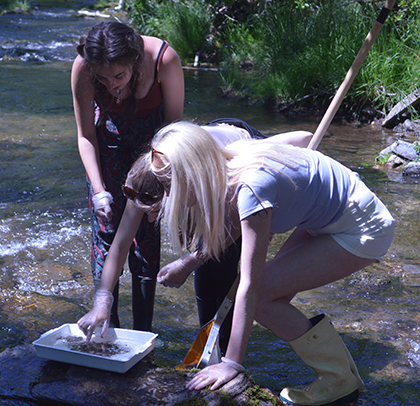
• You must undertake a minimum of 4 days of fieldwork as part of the A Level Geography course. There will be many opportunities for local fieldwork, as well as an optional residential field-trip.
• Your fieldwork report will comprise 20% of the marks awarded for your overall A level grade. This will be an individual investigation and the report will be between 3000-4000 words. It will be marked by your teachers and moderated by the exam board.
Assessment
Examination (80%) – Two exam papers with structured questions and essays.
Coursework (20%) – One independent report.
Examining Board – AQA.
Special Entry Requirements
Learners do not need to have studied GCSE Geography, but for those who have, grade 4 is essential. In addition, standard A level entry requirements apply.
Prohibited Options
None.
What do our learners go on to do?
A Level Geography can be accepted as either a science or an arts subject at universities and students go on to study Geography, Earth Sciences, Environmental Science, International Development, Sustainable Development and a wide range of other courses at university. The skills developed throughout the course are transferable and helpful in a number of careers including urban planning, environmental, water resource and transport management and many IT roles requiring an understanding of GIS patterns.
Cost Implications
Fieldwork is a compulsory part of the A Level Geography course and the minimum requirement is for students to have undertaken 4 days of fieldwork investigation. Local fieldwork studies may be within walking distance of the college or can be accessed by public transport in order to minimise costs. Residential fieldwork is not compulsory, but enhances the learning opportunity of committed geographers. Fieldwork on the Dorset Coast costs approximately £225 for 3 days, and there is often an opportunity for an overseas fieldtrip.
Complementary Subjects or Enrichment Courses
Learners typically have ambitions to study their Humanities subject(s) or a new Humanities subject such as Politics, Philosophy and Economics at University. Geography students also take part in the annual Model United Nations Conference and the Team Gambia expedition.
This information is correct for September 2024 entry.